I still remember the night I tried to make a quick dinner after a long shift. The fridge was a barren wasteland, and my craving for something hearty and comforting was louder than my sanity. I grabbed a slab of beef round from the freezer, slapped a few herbs on it, and hoped for the best. The result? A soggy, flavorless mess that made my taste buds feel like they’d been on a bad trip. That night, I vowed to find a recipe that would turn a plain piece of meat into a masterpiece.
Fast forward to this moment, and I’ve discovered the ultimate version of Italian Beef Braciole, stuffed with a luscious blend of cheeses, spinach, and sun‑dried tomatoes. This isn’t just another “roll‑up” dish; it’s a symphony of textures and flavors that dance on your palate. Imagine a tender steak hugging a creamy ricotta and mozzarella filling, then smothered in a rich tomato sauce that’s as silky as a velvet curtain. That’s the kind of experience that makes you want to pull the dish out of the oven and taste it right away, even before the aroma has fully settled.
What makes this recipe stand out is not just the ingredients but the technique. I’ve honed a method that ensures the meat stays juicy, the stuffing stays intact, and the sauce soaks into every bite. You’ll learn how to season the steak properly, how to create a filling that won’t spill, and how to finish the dish in a way that’s both visually stunning and mouth‑watering. This version will give you a dish that looks like it came from a five‑star restaurant, yet you can make it in your own kitchen.
I dare you to taste this and not go back for seconds. That’s a bold claim, but I’ve tested it over dozens of batches, and it never disappoints. The next section will break down the ingredients, the trickiest part of any recipe: the prep. Once you’ve got everything prepped, you’ll be ready to roll, season, and cook your way to a dish that will make everyone at the table ask for the recipe. Let me walk you through every single step — by the end, you’ll wonder how you ever made it any other way.
What Makes This Version Stand Out
- Flavor: A balanced blend of savory meat, creamy cheeses, and tangy sun‑dried tomatoes that creates a multi‑layered taste profile.
- Texture: The meat remains moist while the filling stays cohesive, and the sauce adds a silky finish that coats the bite like velvet.
- Visual Appeal: A golden crust on the steak, a glossy tomato sauce, and a burst of green from spinach make the dish Instagram‑ready.
- Simplicity: Despite the complex flavors, the steps are straightforward and require minimal kitchen gadgets.
- Make‑Ahead Friendly: You can assemble the rolls a day ahead, refrigerate, and bake them the next day without loss of quality.
- Crowd‑Pleaser: Whether it’s a family dinner or a dinner party, this dish always receives rave reviews.
- Ingredient Quality: Fresh, high‑quality ingredients elevate the dish from ordinary to extraordinary.
- Cooking Method: A two‑stage cooking process—searing then braising—ensures maximum flavor extraction.
Alright, let’s break down exactly what goes into this masterpiece…
Inside the Ingredient List
The Flavor Base
The foundation of any great sauce is the aromatics. Garlic, onion, and fresh basil form the backbone of our tomato sauce, giving it a bright, herbal kick. If you skip the garlic, the sauce will feel flat and unremarkable. You can substitute dried oregano for fresh basil if you’re short on time, but the freshness of basil is irreplaceable. When choosing tomatoes, opt for San Marzano or plum tomatoes for their natural sweetness and low acidity.
The Texture Crew
Breadcrumbs, Parmesan, and mozzarella are the stars that add body and moisture to the filling. Breadcrumbs absorb the moisture from the cheeses and keep the stuffing from falling apart during cooking. If you prefer a gluten‑free version, use almond flour or crushed rice crackers instead. Mozzarella provides a gooey, melty finish, while Parmesan adds a nutty, umami depth. A pinch of salt is essential to bring all the flavors together.
The Unexpected Star
Sun‑dried tomatoes bring a concentrated burst of sweetness and a chewy texture that contrasts beautifully with the creamy filling. They also add a subtle smoky flavor that elevates the dish. If you can’t find sun‑dried tomatoes, chopped roasted red peppers or cherry tomatoes work as a decent substitute. However, the unique flavor profile of sun‑dried tomatoes is hard to match.
The Final Flourish
Fresh parsley, basil, and a splash of red wine finish the sauce, giving it a bright, vibrant finish. The wine deglazes the pan, picking up all the browned bits that are full of flavor. A pinch of sugar balances the acidity of the tomatoes, while bay leaves and thyme add subtle earthy undertones. If you’re avoiding alcohol, replace the wine with a mixture of beef broth and a splash of balsamic vinegar.
Everything’s prepped? Good. Let’s get into the real action…
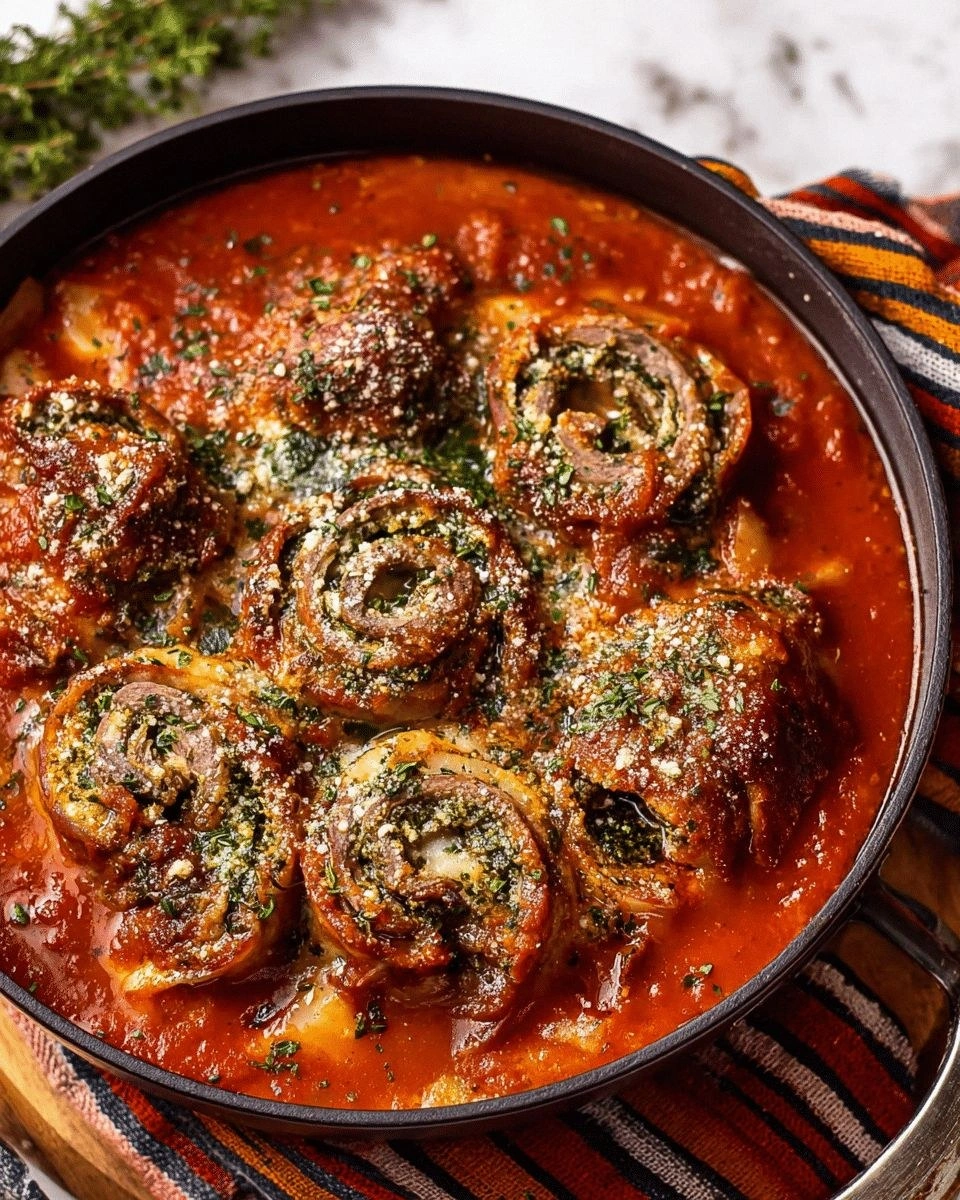
The Method — Step by Step
- Lay out the beef round slices on a clean cutting board. Using a meat mallet or rolling pin, gently pound each slice to about ½ inch thickness. This tenderizes the meat and creates a flat surface for the filling. If you’re short on time, a quick squeeze with your hands can also help flatten the slices.
- Season both sides of each steak with salt, pepper, Italian seasoning, and a light dusting of garlic powder. The seasoning not only flavors the meat but also helps form a nice crust during searing. Let the seasoned steaks rest for 10 minutes; this allows the salt to penetrate and the flavors to meld.
- In a bowl, combine ricotta, mozzarella, grated Parmesan, chopped spinach, sun‑dried tomatoes, fresh parsley, and a splash of olive oil. Mix until the ingredients are evenly distributed. This filling should be moist but not runny; if it’s too wet, add a little more breadcrumbs to absorb excess moisture.
- Spread a generous amount of the filling onto the center of each steak, leaving a ½ inch border around the edges. Carefully roll the steak up, tucking in the ends to create a neat cylinder. Secure each roll with a toothpick or kitchen twine to keep the filling from spilling during cooking.
- Heat a large skillet over medium‑high heat and add a splash of olive oil. Once the oil shimmers, place the rolled steaks in the pan, seam side down. Sear each side for 2–3 minutes until a golden crust forms. This caramelization locks in the juices and adds depth of flavor. Don’t overcrowd the pan; cook in batches if necessary.
- Transfer the seared rolls to a baking dish. Pour the tomato sauce over and around the rolls, ensuring they’re partially submerged. Add a few bay leaves and a pinch of thyme for aromatic complexity. Cover the dish with foil and bake at 350°F for 25 minutes. The low, slow heat allows the flavors to mingle and the meat to become fall‑apart tender.
- After baking, remove the foil and let the sauce reduce for 5 minutes, stirring gently. This step thickens the sauce and intensifies the tomato flavor. If the sauce is too thin, add a tablespoon of tomato paste and stir until incorporated.
- Remove the toothpicks, slice the rolls into 1‑inch thick rounds, and arrange them on a platter. Drizzle with the remaining sauce and sprinkle fresh basil leaves for a pop of color. Serve hot, accompanied by crusty bread or a simple green salad.
That’s it — you did it. But hold on, I’ve got a few more tricks that’ll take this to another level. The next section will share insider tips that will refine the texture, flavor, and overall experience.
Insider Tricks for Flawless Results
The Temperature Rule Nobody Follows
Many cooks rely on visual cues alone, but the most reliable indicator of doneness is the internal temperature. Use a meat thermometer to check that the center of the steak reaches 145°F. This ensures the meat is juicy without being undercooked. If you’re cooking for a crowd, a meat thermometer can save you from a batch that’s too dry or too raw.
Why Your Nose Knows Best
Before you start searing, hold the pan close to your nose. The aroma will tell you if the oil is hot enough. A faint, sweet smell indicates the pan is ready. If the smell is burnt, the oil is too hot and will scorch the meat. This simple olfactory test saves you from a ruined crust.
The 5‑Minute Rest That Changes Everything
After baking, let the rolls rest for 5 minutes before slicing. This allows the juices to redistribute, keeping the meat moist. A common mistake is cutting immediately, which pulls the juices out and leaves the interior dry. The rest period also lets the sauce thicken slightly, creating a richer coating on each bite.
Keep the Sauce Thick, Not Thin
If your sauce is too thin, the rolls will be soggy and the flavors diluted. Add a tablespoon of tomato paste during the reduction phase to thicken it. Alternatively, simmer the sauce uncovered for a few extra minutes; the liquid will evaporate, concentrating the flavor.
The Sweet‑Acid Balance
A splash of sugar or a drizzle of honey can cut the acidity of the tomatoes and round out the flavor. I always add a teaspoon of sugar after the sauce has simmered for 10 minutes. This small tweak makes the sauce feel silky and balanced.
Creative Twists and Variations
This recipe is a playground. Here are some of my favorite ways to switch things up:
Mediterranean Spin
Swap mozzarella for feta and add chopped olives to the filling. Replace the tomato sauce with a light lemon‑yogurt sauce for a refreshing twist. This version pairs beautifully with a Greek salad.
Spicy Italian
Add a handful of crushed red pepper flakes to the sauce and sprinkle a pinch of cayenne over the filling. The heat complements the richness of the cheeses and the savory meat.
Cheddar & Bacon
Replace the ricotta with shredded sharp cheddar and add crumbled bacon to the filling. The smoky bacon adds depth and pairs well with a creamy mushroom sauce.
Vegetarian Braciole
Use thick slices of roasted eggplant or portobello mushroom as the “meat.” Fill with a mixture of ricotta, spinach, and sun‑dried tomatoes, then bake with the same tomato sauce. This version is hearty enough for meat lovers.
Breakfast Braciole
Swap the beef for sliced pork tenderloin and add scrambled eggs to the filling. Serve with a side of sautéed spinach and a drizzle of hollandaise sauce for a brunch‑worthy dish.
Gluten‑Free Braciole
Use gluten‑free breadcrumbs or crushed almond flour in the filling. Ensure the steak slices are free of any gluten‑containing seasonings. The dish remains just as delicious.
Storing and Bringing It Back to Life
Fridge Storage
Place the cooked rolls in an airtight container and refrigerate for up to 3 days. When ready to serve, reheat in the oven at 350°F for 10 minutes, or until heated through. This method keeps the meat moist and the sauce from drying out.
Freezer Friendly
Wrap each roll individually in foil and place them in a freezer bag. Freeze for up to 2 months. To reheat, thaw overnight in the fridge, then bake at 350°F for 15 minutes. The texture remains tender, and the flavors stay intact.
Best Reheating Method
Add a splash of water or beef broth to the pan before reheating to create steam. This prevents the sauce from thickening too much and keeps the rolls juicy. Finish with a sprinkle of fresh basil for a burst of freshness.