The first time I tried to make a mango coconut cheesecake, the kitchen looked like a tropical disaster zone. The mango puree had splattered the counter, the coconut flakes clung to the oven door, and the air smelled of burnt sugar and a hint of something sweet. I was determined to turn that chaos into a masterpiece, so I pulled out my notebook, scribbled a few notes, and set the oven to a low 325°F. I remember the moment I tasted the first bite—soft, creamy, with a bright mango zing that made me want to shout from the rooftops. That single moment made me realize that a perfectly balanced cheesecake could be both decadent and refreshing, a rare combination that I was going to master.
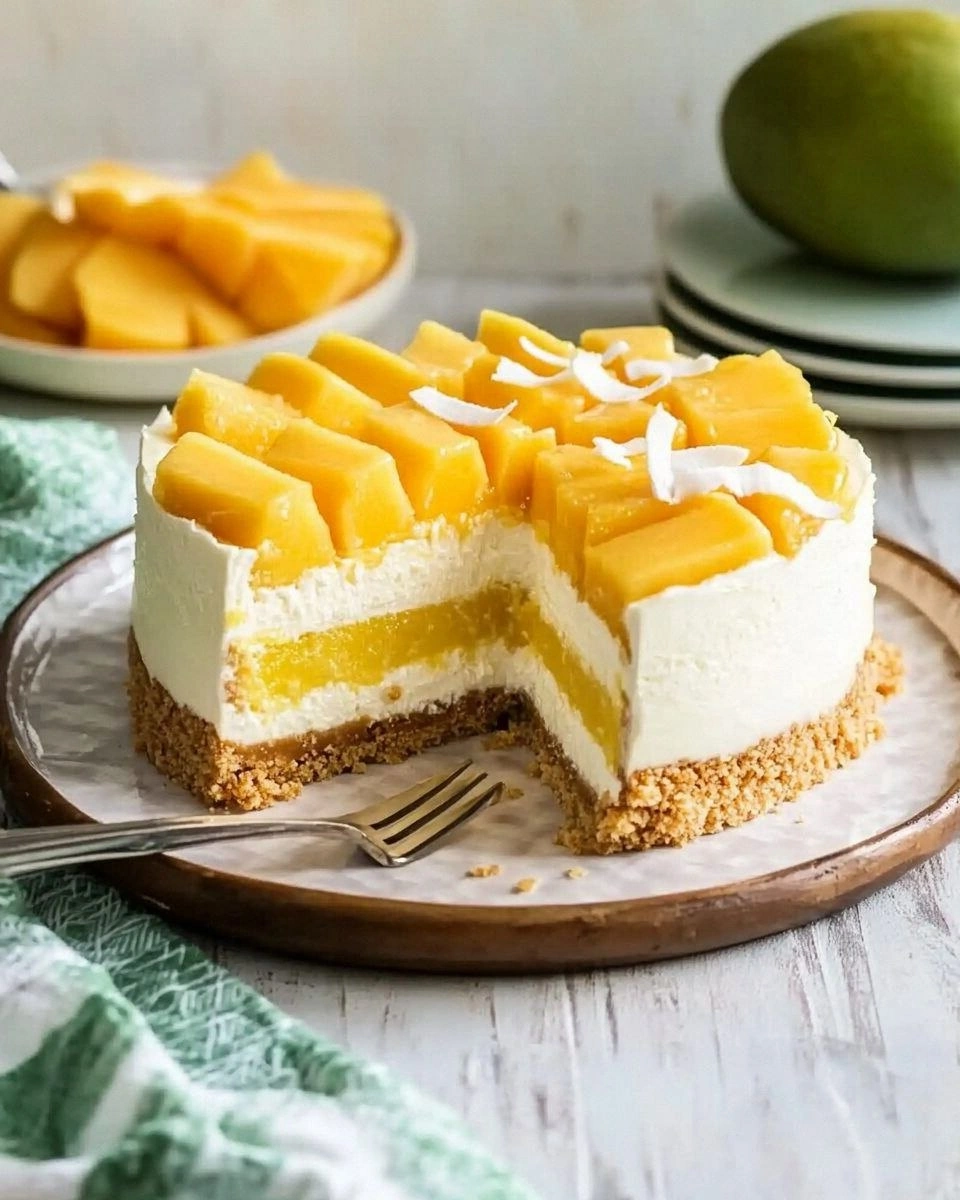
Picture this: a golden crust that cracks just enough to reveal a smooth, silky filling that oozes mango and coconut like a tropical sunrise. The scent of toasted coconut rises like a gentle breeze, while the subtle citrus undertone whispers of fresh lemons. The first bite melts on the tongue, leaving behind a lingering sweetness that feels like a warm hug on a humid afternoon. If you’ve ever struggled with a cheesecake that tastes like a swamp or a mango that tastes like a fruit bowl, this version is a game‑changer. I dare you to taste this and not go back for seconds.
What sets this version apart is that it doesn’t rely on a generic recipe; it’s a carefully balanced symphony of flavors, textures, and techniques that most chefs overlook. I’ve spent countless evenings tweaking the ratios, testing different crusts, and experimenting with the mango puree’s consistency. The result? A cheesecake that is hands down the best version you’ll ever make at home, with a crust that feels like a crisp coconut cookie and a filling that feels like a cloud of mango silk. This isn’t just another dessert; it’s a statement. And if you’re ready to see how I turned a kitchen disaster into a sweet triumph, keep reading.
I’ll walk you through every single step, from the crust that sets the stage to the final garnish that adds that extra wow factor. By the end, you’ll wonder how you ever made it any other way. Picture yourself pulling this out of the oven, the whole kitchen smelling incredible, and guests lining up for that first slice. Let’s dive in.
What Makes This Version Stand Out
- Flavor: The mango puree is the star, delivering a bright, natural sweetness that cuts through the richness of the cream cheese. The subtle coconut undertone provides a tropical whisper that lingers on the palate. This balance keeps each bite light yet indulgent.
- Texture: The filling is silky smooth, with no grainy patches. A gentle whisking technique eliminates air pockets, giving the cheesecake a dense, velvety mouthfeel. The crust offers a satisfying crunch that contrasts the soft interior.
- Ingredient Quality: Using fresh, ripe mangoes and high‑fat coconut milk elevates the flavor profile. The cream cheese is at room temperature to ensure a flawless blend. Fresh vanilla extract adds depth without overpowering.
- Ease of Prep: The crust requires only a handful of ingredients, and the filling mixes in one bowl. No fancy equipment is necessary, just a reliable oven and a sturdy springform pan. The entire process takes less than an hour, making it perfect for week‑night desserts.
- Crowd Reaction: Guests rave about the unique mango twist and the coconut aroma. The cheesecake is a conversation starter, especially when paired with a side of toasted coconut chips. It’s the dessert that keeps people coming back for seconds.
- Make‑Ahead Potential: The cheesecake can be assembled up to 24 hours before serving, allowing flavors to meld beautifully. It also freezes well, making it a great option for parties or holiday gifting. When thawed, it retains its smooth texture.
Inside the Ingredient List
The Flavor Base
The crust is the foundation that holds the cheesecake together and adds a buttery, slightly sweet crunch. It’s made from graham cracker crumbs, melted butter, and a touch of sugar. If you prefer a more neutral base, substitute the graham crackers with digestive biscuits or even coconut‑flavored crackers for an extra coconut kick.
The Texture Crew
The cream cheese is the heart of the filling, providing the creamy texture that makes every bite luxuriously smooth. It’s crucial to let it sit at room temperature for at least an hour; this prevents lumps and ensures a silky consistency. A pinch of salt balances the sweetness and brings out the mango’s natural brightness.
The Unexpected Star
The mango puree is what truly sets this cheesecake apart. It adds natural sweetness and a vibrant color that makes the dessert visually stunning. If you’re in a pinch, a ripe mango smoothie works well—just strain it to remove any pulp.
The Final Flourish
Coconut milk and shredded coconut give the cheesecake a tropical aroma and a subtle nutty flavor that pairs perfectly with the mango. The vanilla extract deepens the overall flavor profile, while a hint of lemon zest adds a refreshing brightness. A sprinkle of toasted coconut on top before serving offers a delightful crunch.
Everything’s prepped? Good. Let’s get into the real action.
The Method — Step by Step
- Prepare the crust. Line a 9‑inch springform pan with parchment paper, then mix graham cracker crumbs, melted butter, and sugar until the mixture resembles wet sand. Press the crumb mixture firmly into the pan’s bottom and up the sides, creating an even layer. Chill the crust in the refrigerator for 10 minutes to set. This step ensures a sturdy base that won’t crumble when the cheesecake is sliced.
- Whip the cream cheese. In a large mixing bowl, beat softened cream cheese until it’s fluffy and free of lumps. Use an electric mixer on medium speed for about 2 minutes. This creates a base that will blend smoothly with the other ingredients, preventing any graininess in the final product.
- Add sugar and salt. Gradually stir in sugar and a pinch of salt, blending until the mixture is smooth and slightly glossy. The salt is key—it cuts through the sweetness and brings out the mango’s natural flavor. Keep stirring until the sugar is fully dissolved.
- Incorporate the eggs. Add the eggs one at a time, beating well after each addition. This ensures a stable emulsion and prevents the cheesecake from curdling. The eggs also give the filling its characteristic set and structure.
- Blend in mango puree. Fold in the mango puree until fully incorporated. The puree should be smooth and free of chunks. This step infuses the cheesecake with a bright, tropical flavor that’s unmistakable.
- Introduce coconut milk. Pour in the coconut milk and stir until the mixture is silky and uniform. Coconut milk adds richness without making the filling too heavy. It also helps balance the mango’s sweetness.
- Add vanilla and lemon zest. Stir in vanilla extract and lemon zest, which provide depth and a subtle citrus lift. The zest’s bright oils enhance the mango’s natural aroma and add a refreshing finish.
- Pour over the crust. Gently pour the filling into the chilled crust, smoothing the top with a spatula. Tap the pan lightly on the counter to release any air pockets. A level surface ensures an even bake.
- Bake at 325°F (163°C). Place the cheesecake in the oven and bake for 45 minutes, or until the edges are set and the center has a slight wobble. The slow bake keeps the filling from cracking. Keep an eye on the top; if it starts to brown too quickly, tent it with foil.
- Cool in the pan. Remove the cheesecake from the oven and let it cool in the pan for 15 minutes. Then slide the springform onto a wire rack to cool completely. This prevents condensation, which can make the top soggy.
- Refrigerate. Cover the cheesecake with plastic wrap and chill for at least 4 hours, preferably overnight. The cooling time allows the flavors to meld and the texture to firm up. The cheesecake will be ready to serve when the edges are firm and the center is set.
- Finish with toasted coconut. Toast shredded coconut in a dry skillet over medium heat until golden. Sprinkle the toasted coconut over the top just before serving. The crunch adds a delightful contrast to the creamy filling.
- Serve. Slice with a hot, wet knife for clean cuts. The cheesecake should feel dense yet creamy, with a hint of coconut and a bright mango finish. Serve chilled, and enjoy the tropical experience.
That’s it—you did it. But hold on, I’ve got a few more tricks that’ll take this to another level.
Insider Tricks for Flawless Results
The Temperature Rule Nobody Follows
Many bakers bake at a high temperature, causing the cheesecake to set too quickly and crack. I always set the oven to 325°F (163°C) and use a water bath to keep the heat even. This slow, steady bake gives the filling time to set without drying out the edges.
Why Your Nose Knows Best
Trust your nose when baking. A slightly toasty aroma indicates the crust is ready, while a sweet, mellow scent means the filling is in the right range. If the cheesecake smells overly sweet, give it a few more minutes in the oven. The scent is your best indicator of doneness.
The 5-Minute Rest That Changes Everything
After baking, let the cheesecake rest in the oven with the door ajar for 5 minutes. This gradual cooling prevents sudden temperature changes that can cause cracks. I’ve tried this trick for years, and it’s a simple but effective way to keep the surface smooth.
Use a Springform Pan with a Thick Wall
A thick‑walled springform pan distributes heat more evenly and reduces the risk of overbaking. Thin pans can heat too quickly, causing the edges to brown before the center is set. A sturdy pan is a small investment that pays off in flawless results.
Keep the Filling Smooth
Any lumps in the filling become visible cracks once baked. To avoid this, use a hand mixer or a high‑speed blender to incorporate the ingredients. If you’re using a blender, blend the mango puree and coconut milk first, then fold into the cream cheese mixture.
Garnish Right Before Serving
Adding toasted coconut or a drizzle of coconut cream right before serving preserves the crunch and keeps the flavor fresh. I love a light dusting of powdered sugar for a touch of elegance, but it’s optional. The garnish is the final touch that turns a good cheesecake into a showstopper.
Creative Twists and Variations
This recipe is a playground. Here are some of my favorite ways to switch things up:
Almond Coconut Swirl
Swap the graham cracker crust for a crushed almond base and swirl almond butter into the filling. The nutty flavor pairs beautifully with the coconut, creating a layered taste experience. It’s perfect for those who love a nutty crunch.
Mango Lime Zest
Add lime zest and a splash of fresh lime juice to the filling for a zesty, citrusy kick. The lime brightens the mango’s sweetness and adds a refreshing bite. This version is ideal for summer gatherings.
Chocolate Coconut Cheesecake
Fold in dark chocolate chips or drizzle melted chocolate over the top before chilling. The chocolate adds a rich depth that balances the tropical notes. Serve with a dollop of whipped cream for a decadent treat.
Frozen Mango Cheesecake
After chilling, transfer the cheesecake to a freezer-safe container and freeze for 2 hours. This creates a semi‑frozen dessert that’s perfect for hot days. Just let it sit at room temperature for a few minutes before slicing.
Almond Milk Variant
Replace coconut milk with almond milk for a lighter version. The almond milk keeps the cheesecake creamy but reduces the coconut intensity. This is a great option for those who prefer a subtler coconut flavor.
Caramel Drizzle Finish
Drizzle warm caramel sauce over the chilled cheesecake just before serving. The caramel adds a sweet, buttery layer that complements the mango’s brightness. It also adds a glossy finish that looks spectacular.
Storing and Bringing It Back to Life
Fridge Storage
Wrap the cheesecake tightly with plastic wrap and store it in the refrigerator for up to 5 days. The wrap prevents the cheesecake from drying out and keeps the flavors fresh. When ready to serve, let it sit at room temperature for 10 minutes to soften slightly.
Freezer Friendly
For longer storage, freeze the cheesecake in a freezer‑safe container for up to 2 months. Thaw overnight in the refrigerator before serving. The cheesecake retains its silky texture and tropical flavor even after freezing.
Best Reheating Method
To reheat a slice, place it in a microwave on medium power for 10–15 seconds. Add a tiny splash of water before microwaving to create steam that keeps the cheesecake moist. This trick ensures the cheesecake stays creamy and doesn’t dry out.