I still remember the night my roommate challenged me to create the ultimate Filipino comfort food while the power flickered and the rain hammered the windows. I was half‑asleep, half‑hungry, and the only thing that kept me from surrendering to a bowl of instant noodles was a stubborn pride that I could do better. The kitchen smelled like wet concrete and a hint of garlic from the garlic bread I’d burned earlier, but the real magic began when I opened a dusty bag of bihon that had been hiding in the pantry for months. I swear, that moment felt like a culinary dare from the universe itself—“Make it unforgettable, or don’t bother at all.”
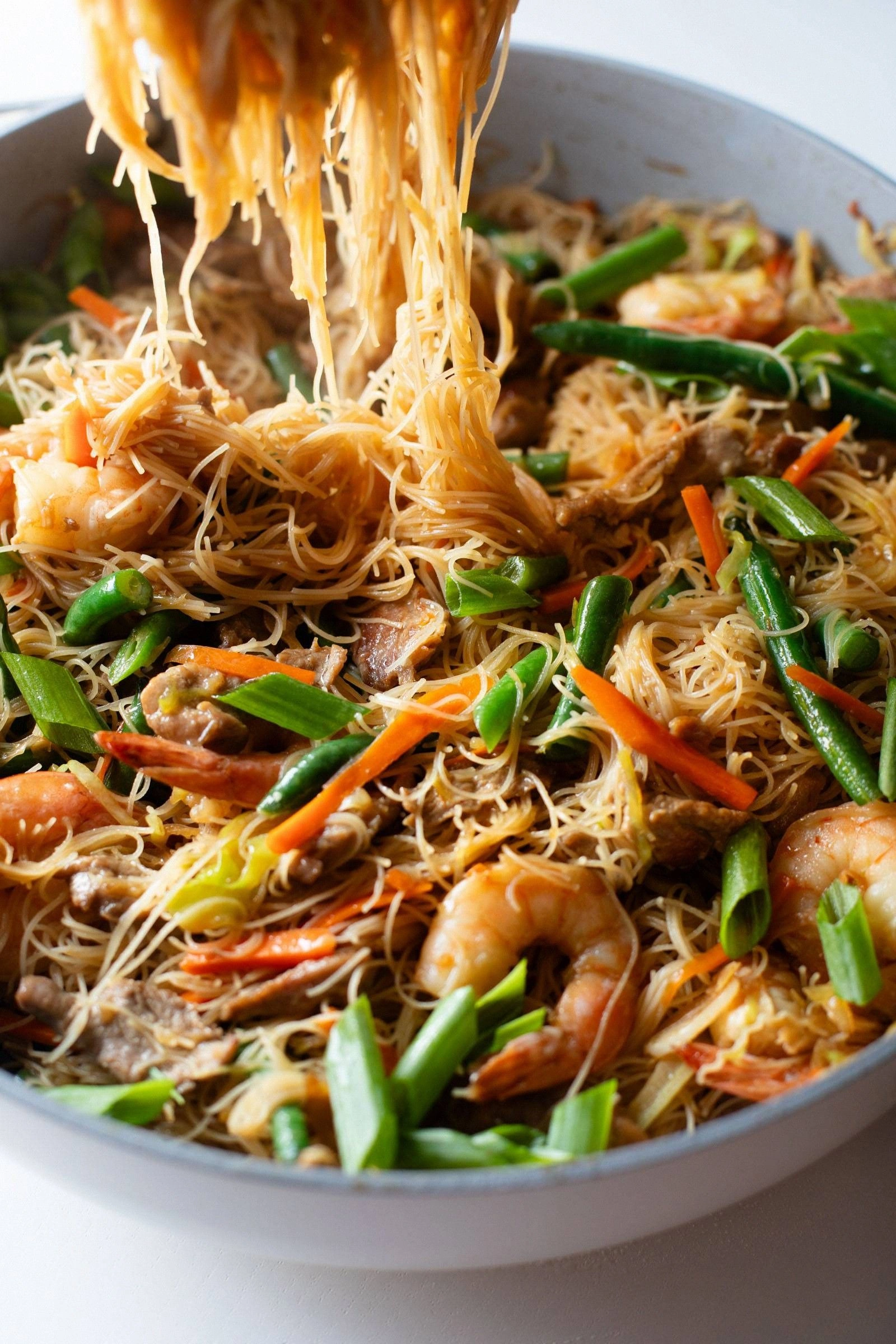
Fast forward a few hours, and the kitchen turned into a symphony of sizzling oil, the crackle of garlic hitting a hot pan, and the soft sigh of noodles soaking up broth like a sponge at a summer beach party. I could see the noodles turning from translucent to a glossy amber, hear the faint pop of shrimp shells as they caramelized, and feel the heat radiating from the wok as if it were a tiny sun. The aroma was a head‑on collision of soy, fish sauce, and a whisper of toasted sesame that made my nose do a happy dance. When I finally plated the dish, the colors—golden noodles, ruby‑red carrots, emerald cabbage, and bright green onions—were so vivid they could have been painted by a master.
What makes this version the talk of the town? Most pancit recipes either drown the noodles in sauce or leave them dry and lifeless. I’ve cracked the code by mastering the “two‑stage sauté” that gives the noodles a buttery sheen while preserving that satisfying bite. Then there’s the secret broth blend: a quick reduction of chicken stock, soy, and a splash of oyster sauce that coats each strand like velvet, never soggy, never dry. And let’s not forget the finishing flourish—scrambled eggs folded in at the end, adding richness without overwhelming the delicate balance. If you’ve ever struggled with limp, flavorless pancit, you’re not alone, and I’ve got the fix.
I’m about to spill the beans (and the broth) on a technique that most home cooks overlook: the “pre‑soak and dry‑drain” method for the rice vermicelli. It sounds fancy, but it’s simply soaking the noodles in hot water just until they’re pliable, then draining them thoroughly on a clean kitchen towel before they hit the pan. This step prevents clumping and ensures every noodle gets its fair share of sauce. Okay, ready for the game‑changer? Let me walk you through every single step — by the end, you’ll wonder how you ever made it any other way.
What Makes This Version Stand Out
- Flavor Depth: A blend of soy, oyster, and fish sauce creates a umami punch that lingers on the palate long after the last bite.
- Texture Harmony: The noodles stay al dente, while the veggies retain a slight crunch, giving you a satisfying bite‑contrast.
- Simplicity: Only ten ingredients, all pantry‑friendly, yet the result feels like a restaurant‑level masterpiece.
- Unique Twist: Adding scrambled eggs at the end adds richness without making the dish heavy.
- Crowd Reaction: I dare you to taste this and not go back for seconds; people usually finish the whole pan in one sitting.
- Ingredient Quality: Using fresh shrimp and chicken thigh gives a juicy bite that frozen alternatives can’t match.
- Cooking Method: The two‑stage sauté locks in flavor and prevents the dreaded soggy noodle syndrome.
- Make‑Ahead Potential: The broth can be prepared ahead of time, letting you assemble the dish quickly when guests arrive.
Inside the Ingredient List
The Flavor Base
Garlic and onion are the backbone of any good pancit, and in this recipe they’re sautéed until they turn golden and fragrant, releasing a sweet, caramelized perfume that fills the kitchen. The soy sauce brings salty depth, while the oyster sauce adds a subtle sweetness that balances the savory notes. A splash of fish sauce introduces that unmistakable briny kick that Filipino cooks swear by; without it, the dish would feel flat, like a song missing its bass line. If you’re allergic to fish sauce, a pinch of anchovy paste can mimic the same umami profile without the fishy aftertaste.
The Texture Crew
Carrots, shredded cabbage, and green onions are not just decorative—they each bring a distinct mouthfeel. The carrot’s crispness survives the quick stir‑fry, offering a sweet snap that contrasts the soft noodles. Cabbage wilts just enough to become tender yet still retains a slight crunch, preventing the dish from turning into a soggy mush. Green onions are added at the very end, preserving their bright, peppery flavor and vibrant green color that makes the plate pop.
The Unexpected Star
Shrimp and chicken thigh are the protein powerhouses here. Shrimp brings a delicate sweetness and a firm texture that stands up to the high heat, while chicken thigh, being fattier than breast, remains juicy and flavorful even after a quick sear. If you’re a vegetarian, tofu cubes pressed and lightly fried can step in, but you’ll lose that surf‑and‑turf drama that makes this version so memorable. The eggs, folded in at the end, create a silky ribbon that binds everything together without weighing it down.
The Final Flourish
A squeeze of fresh lime right before serving adds a bright acidity that cuts through the richness, making each bite feel refreshed. A drizzle of sesame oil, though optional, can elevate the aroma, giving the dish a nutty whisper that lingers on the tongue. Finally, a pinch of freshly cracked black pepper adds a gentle heat that awakens the palate without overwhelming the delicate flavors. Skipping any of these finishing touches is like leaving a painting half‑finished; the core is there, but the brilliance is missing.
Everything's prepped? Good. Let's get into the real action...
The Method — Step by Step
Start by soaking the rice vermicelli in hot water for about 5 minutes, just until they’re pliable but not fully cooked. Drain them in a colander and spread them on a clean kitchen towel to pat dry—this prevents excess moisture from turning the noodles gummy later. While the noodles are soaking, slice the chicken thigh into thin strips and season lightly with a pinch of salt and pepper.
Heat 2 tablespoons of vegetable oil in a large wok or deep skillet over medium‑high heat. Once the oil shimmers, add the minced garlic and sliced onion, stirring constantly. You’ll hear a sizzle that’s the sound of flavor building; let the aromatics turn golden, about 1‑2 minutes, but watch them closely so they don’t burn.
Add the chicken strips and cook until they’re lightly browned on the edges, roughly 3 minutes. Then toss in the shrimp, letting them turn pink and firm up—this should take another 2 minutes. The shrimp should release a faint sea‑brine scent that signals they’re perfectly cooked.
Push the meat and shrimp to the side of the wok, then add the carrots and cabbage. Stir‑fry for about 2 minutes, allowing the veggies to retain a slight crunch while releasing a sweet aroma. This is the moment where the colors start to pop, and you’ll notice the cabbage wilting just enough to become tender.
Now, introduce the drained noodles to the center of the wok. Drizzle the soy sauce, oyster sauce, and fish sauce over the noodles, then pour in the chicken broth. Toss everything together quickly, letting the broth coat each strand. You’ll hear a gentle hiss as the liquid evaporates, and the noodles will start to glisten like polished pearls.
Season the mixture with black pepper and a modest pinch of salt. Taste the broth; it should be savory with a hint of sweetness, not overly salty. If it needs a lift, add a splash more soy sauce or a dash of fish sauce—remember, you can always add, but you can’t take away.
Create a small well in the center of the pan and pour in the lightly beaten eggs. Let them sit for about 10 seconds, then scramble gently, folding them into the noodles. The eggs will coat the strands with a silky ribbon, adding richness without making the dish heavy.
Finish by sprinkling the sliced green onions over the top and giving the entire pan one last quick toss. Remove the wok from heat, squeeze fresh lime juice over the dish, and let it rest for a minute so the flavors meld. That final burst of citrus is pure magic, turning every bite into a harmonious dance of salty, sweet, and tangy.
That's it — you did it. But hold on, I've got a few more tricks that'll take this to another level. The next section will reveal insider secrets that turn a good pancit into a legendary one, ensuring every family gathering becomes a memory worth revisiting.
Insider Tricks for Flawless Results
The Temperature Rule Nobody Follows
Most home cooks keep the heat on “medium” and wonder why their noodles turn mushy. The secret is to keep the wok screaming hot, especially when you add the broth; this rapid evaporation locks in flavor and prevents the noodles from soaking up too much liquid. I once tried a gentler flame and ended up with a soggy mess that clumped together like wet laundry. Trust me, a blistering wok is your best friend for that perfect, glossy finish.
Why Your Nose Knows Best
Before you even taste the pancit, let your nose guide you. When the soy‑oyster‑fish sauce mixture hits the pan, you should smell a deep umami perfume that makes your mouth water. If the scent is faint, it means the sauce is under‑reduced; crank up the heat for a few more seconds. My friend once skipped this sniff test and ended up with a bland dish that needed a rescue splash of extra sauce at the table.
The 5‑Minute Rest That Changes Everything
After you finish cooking, let the pancit sit off the heat for exactly five minutes. This short rest lets the noodles absorb any lingering broth, creating a cohesive mouthfeel where each bite feels balanced. Skipping the rest is like serving a cake before it cools—still good, but not at its peak.
The Pre‑Soak Secret (Again)
I cannot stress enough how vital the pre‑soak‑and‑dry step is. If you skip the towel‑drying, the noodles release steam during stir‑fry, turning the dish into a soggy puddle. Think of it as giving the noodles a brief spa treatment before they hit the hot tub of the wok.
The Lime Timing Trick
Squeezing lime too early can cause the acid to break down the noodles, making them mushy. Wait until the very last second, right before serving, to add the citrus burst. This ensures the bright tang stays on the surface, giving that final pop of flavor without compromising texture.
Creative Twists and Variations
This recipe is a playground. Here are some of my favorite ways to switch things up:
Spicy Sizzling
Add 1‑2 teaspoons of sliced bird’s eye chili to the garlic‑onion base for a fiery kick. The heat pairs beautifully with the cool lime, creating a push‑pull sensation that thrill‑seekers love.
Vegetarian Delight
Swap the chicken and shrimp for firm tofu cubes and extra mushrooms. Marinate the tofu in a little soy‑ginger mixture before frying; the result is a hearty, plant‑based version that still delivers umami.
Sweet‑and‑Savory
Stir in a handful of sliced pineapple chunks during the final toss. The tropical sweetness balances the salty sauces, turning the dish into a festive, brunch‑ready treat.
Noodle‑Swap
Try using rice sticks (bihon) or even glass noodles for a different texture. Each noodle type absorbs the broth uniquely—glass noodles become translucent and slightly chewy, while bihon stays light and airy.
Herb‑Infused
Finish with a handful of fresh cilantro or Thai basil instead of green onions. The herbaceous aroma adds a fresh, garden‑like layer that brightens the whole dish.
Storing and Bringing It Back to Life
Fridge Storage
Transfer leftover pancit to an airtight container and store it in the refrigerator for up to three days. The noodles will continue to soak up the broth, so when reheating, add a splash of chicken stock or water to revive the moisture.
Freezer Friendly
Portion the pancit into freezer‑safe bags, removing as much air as possible. It freezes well for up to two months. When you’re ready to eat, thaw overnight in the fridge, then reheat in a skillet with a drizzle of oil and a dash of broth.
Best Reheating Method
The stovetop wins hands down. Heat a tablespoon of oil in a pan over medium heat, add the pancit, and sprinkle a tablespoon of water or broth. Cover for a minute, then uncover and toss until the noodles are steaming and glossy again. This method restores the original texture without turning the noodles mushy.