Picture this: the kitchen clock is ticking, your phone is buzzing with a friend’s dare, and the fridge is a barren wasteland of questionable leftovers. I’m staring at a box of Trader Joe’s wontons, a carton of chicken broth, and a jar of chili oil that has been gathering dust for months. I thought, “Why not turn this into something that screams, ‘I’m in control of my cravings’?” And thus, the 5‑Minute Spicy Wonton Soup wit was born. It’s not just a recipe; it’s a culinary rebellion against the ordinary.
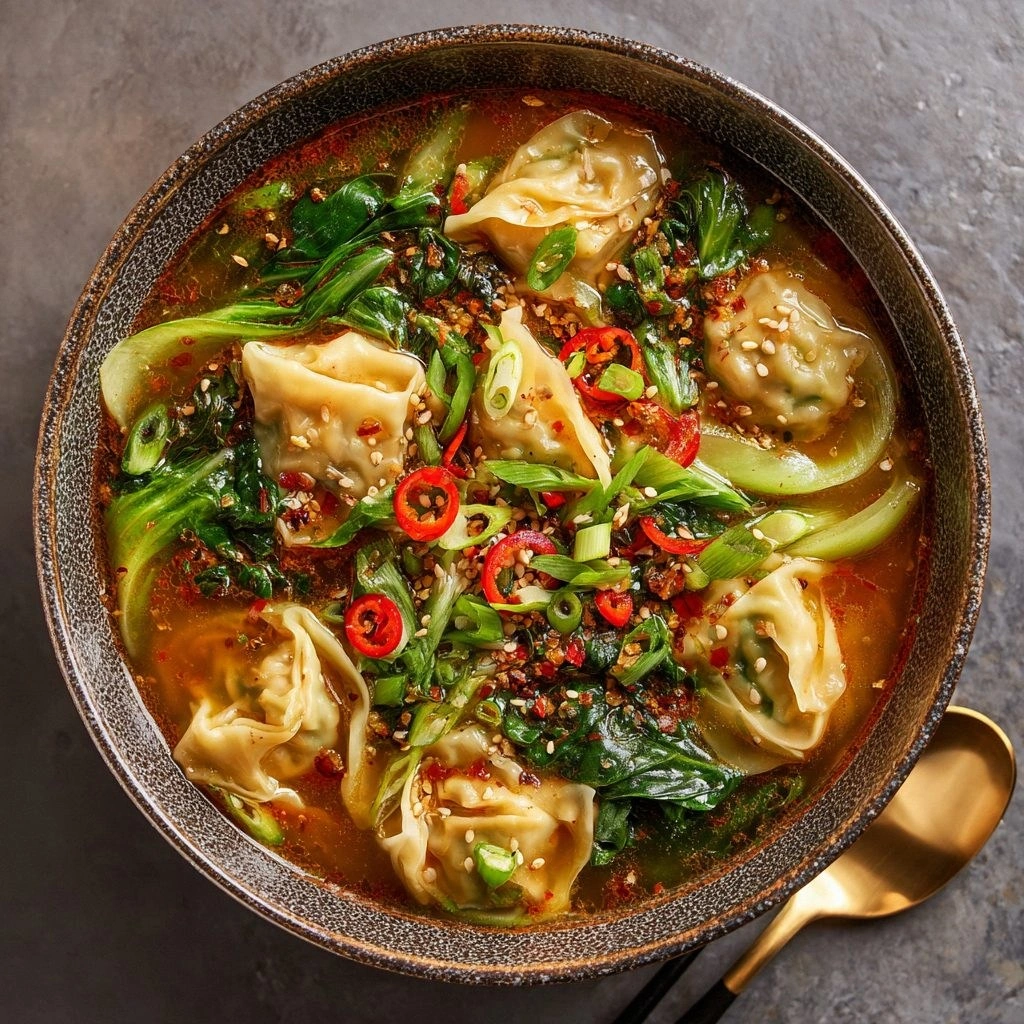
The first bite is a symphony of textures: the wonton skins puff up like tiny, savory clouds, the broth sings with a bold, umami chorus, and the chili oil drips a fiery ribbon down your tongue. The aroma is an instant trip back to a bustling night market, where steam rises and the air is heavy with garlic and ginger. The heat is not a blunt punch but a warm, lingering kiss that stays with you long after the spoon is set aside. The flavor profile is layered—salty, sweet, smoky, and peppery—all dancing together like a well‑rehearsed jazz band. The finish is a subtle, lingering pepper that invites you to take another spoonful.
What makes this version a game‑changer is its simplicity married to depth. It takes a pantry staple and turns it into a Michelin‑star experience without the need for exotic ingredients or hours of prep. I dare you to taste this and not go back for seconds; the heat is balanced, not overwhelming, and the broth is rich enough to satisfy a midnight craving. Most recipes get this completely wrong by over‑boiling the wontons or under‑seasoning the broth. Here, each component is carefully calibrated to deliver a harmonious explosion of flavor.
I’ll be honest—when I first tried this, I almost set the kitchen on fire. The chili oil splattered everywhere, and my apron was a canvas of red. But that mishap taught me the importance of timing and the right amount of heat. If you’ve ever struggled to get the perfect wonton texture, you’re not alone—this recipe has the fix. Picture yourself pulling this out of the pot, the whole kitchen smelling incredible, and the guests lining up for a taste. Let me walk you through every single step—by the end, you’ll wonder how you ever made it any other way.
What Makes This Version Stand Out
- Flavor: Every sip of broth hits the palate with a balanced umami punch that’s both comforting and adventurous. The subtle sweetness from the chicken broth is offset by the sharpness of chili oil, creating a dynamic flavor profile.
- Texture: The wontons are perfectly chewy, with a slight crisp on the edges that adds a delightful contrast to the silky broth.
- Speed: In just five minutes you can have a steaming bowl ready, making it ideal for late‑night cravings or a quick weekday meal.
- Ingredient Quality: Using Trader Joe’s wontons means you get a consistent, high‑quality product that doesn’t require you to make your own wrappers.
- Audience: It’s a crowd‑pleaser—friends, family, or coworkers will rave about the heat and depth.
- Make‑Ahead: The broth can be made in advance and reheated without losing flavor, making it a perfect prep‑and‑serve option.
- Versatility: Swap out protein or add veggies for a personalized twist.
- Nutrition: Packed with protein and carbs while keeping fat content moderate—great for a balanced meal.
Alright, let’s break down exactly what goes into this masterpiece...
Inside the Ingredient List
The Flavor Base
Chicken broth is the backbone of this soup, providing a savory canvas that carries every other element. I use a low‑sodium, clear broth to keep the flavor bright; if you prefer a richer base, a homemade broth or a stock with a few aromatics will elevate the depth. The broth’s clarity allows the chili oil’s color to pop, giving you that eye‑catching visual cue of heat. Skipping the broth entirely would leave the dish dry and unbalanced, so keep it on hand. For a twist, try a pork or beef broth for a different umami tone.
If you’re in a hurry, a ready‑made bouillon cube works too—just dissolve it in boiling water and let it simmer for a minute to extract the flavor. I’ve found that adding a splash of soy sauce right before serving boosts the umami without overwhelming the broth. The broth also helps the wontons cook evenly; the liquid temperature should stay around 190°F (88°C) to prevent the wrappers from becoming soggy.
Remember, the broth’s temperature is key; if it’s too hot, the wontons will break apart, and if it’s too cool, the wontons will remain chewy and undercooked. Keep the heat low to medium and let the broth simmer gently. A gentle simmer also ensures the flavors meld without the broth evaporating too quickly. If you’re cooking for a crowd, you can keep the soup on low heat for up to 30 minutes without losing quality.
The Texture Crew
Trader Joe’s wontons are the star of the show, but their texture depends on proper handling. They come in a convenient frozen package, so you can pop them straight into the simmering broth. The instant cooking time—just a few minutes—keeps the wrappers tender yet firm. If you prefer a slightly crispier edge, lightly pan‑fry the wontons for 30 seconds before adding them to the broth; this adds a caramelized flavor and a delightful crunch. Skipping the wontons would turn this into a plain broth, so make sure you have them ready to go.
If you’re a fan of texture, consider adding a handful of bean sprouts or sliced bamboo shoots to the soup. These add a refreshing crunch and absorb the broth’s heat, balancing the overall mouthfeel. The key is to add them in the last minute of cooking so they stay crisp. Also, be careful not to overcook the wontons; they should be al dente and not mushy. The right texture makes the dish feel like a restaurant experience.
The Unexpected Star
Chili oil is the secret weapon that brings heat without overpowering the broth. I use a high‑quality chili oil that has a clean, slightly nutty flavor—no burnt undertones. The oil’s heat is measured in Scoville units, but the key is to taste as you go; add a splash at a time until you hit the desired spiciness. If you’re sensitive to heat, start with a teaspoon and let the broth absorb it before adding more. Skipping the chili oil would leave the soup bland, so don’t shy away from the heat.
The oil also adds a glossy sheen to the broth, making it visually appealing. If you want an extra kick, mix in a pinch of Sichuan peppercorns; they add a numbing sensation that pairs beautifully with the heat. Another option is to drizzle a few drops of sesame oil for a nutty aroma that rounds out the flavor. The chili oil’s versatility makes it a staple in many Asian soups, and this recipe showcases its full potential.
The Final Flourish
Finishing touches like scallions, garlic, ginger, and sesame oil bring the soup together. The scallions add a fresh, bright note that cuts through the richness of the broth. Minced garlic and grated ginger provide aromatic depth, while a splash of sesame oil adds a subtle nuttiness that balances the heat. I recommend adding these aromatics in the last minute of cooking to preserve their bright flavors. If you’re feeling adventurous, throw in a handful of fresh cilantro for an herbal finish.
Salt and pepper are the simplest seasonings but essential for bringing all the flavors to the forefront. I use a pinch of salt to taste and a light dusting of black pepper; over‑salting can mask the subtle sweetness of the broth. The final flourish is all about balance—too much pepper, and the soup becomes cloying; too little, and it feels flat. Adjust to your palate, and you’ll have a perfectly seasoned bowl.
Everything's prepped? Good. Let's get into the real action...
The Method — Step by Step
- Bring the chicken broth to a gentle simmer in a medium pot. The goal is to maintain a steady, low heat that keeps the broth from boiling over. This step is crucial because a rolling boil will break down the wonton wrappers. Keep the pot covered to trap steam, which helps the broth stay hot and flavorful. Once the broth is simmering, add the soy sauce to infuse umami.
- Add the Trader Joe’s wontons directly to the simmering broth. Use a slotted spoon to gently lower them in, ensuring they are fully submerged. The wontons will begin to puff up within a minute, signaling they’re cooking properly. Stir occasionally to prevent sticking. After about 3 minutes, the wontons should be tender yet firm.
- While the wontons cook, sauté the minced garlic, grated ginger, and sliced scallions in a small pan with a drizzle of sesame oil. Heat until the garlic turns fragrant but not browned. This quick sauté releases essential oils that enhance the broth’s aroma. Once ready, pour this aromatic mixture into the pot. The combination of fresh aromatics and broth creates a flavor explosion.
- Pour in the chili oil, starting with one tablespoon. Stir gently to distribute the heat evenly. Taste the broth; if you want more heat, add an additional teaspoon. Remember, the heat builds gradually, so add slowly and let the broth absorb the flavor. This step is the moment of truth—your soup’s personality is defined here.
- Add a pinch of salt and a light dusting of pepper. Stir and let the seasonings dissolve. The broth should now taste balanced—savory, slightly sweet, with a kick of heat. If you’re using a low‑sodium broth, you might need a bit more salt, but be cautious not to oversalt. Adjust to taste as you go.
- Reduce the heat to low and let the soup simmer for another 2 minutes. This allows the flavors to meld without over‑cooking the wontons. Keep the pot covered to retain moisture. The broth should be steaming, and the wontons should be perfectly tender.
- Turn off the heat and let the soup sit for a minute before serving. This pause lets the heat settle and the flavors to marry. It also gives the broth a chance to thicken slightly. Serve hot in bowls, and garnish with fresh scallion tops and a drizzle of sesame oil if desired. Enjoy the instant gratification of a gourmet bowl in five minutes.
That's it — you did it. But hold on, I've got a few more tricks that'll take this to another level...
Insider Tricks for Flawless Results
The Temperature Rule Nobody Follows
Maintaining a low simmer is the secret to perfect wontons. If the broth is too hot, the wrappers will tear, and the broth will evaporate. Keep the heat between 190°F and 200°F, and use a thermometer if you’re precise. I’ve learned that a steady, low heat lets the flavors meld without rushing the process. A quick test: drop a spoonful of broth into cold water; if it sizzles, the broth is too hot.
Why Your Nose Knows Best
Smell is your best judge of seasoning. As soon as the broth hits the right temperature, the aroma will fill the kitchen. If it smells flat, add a splash of soy sauce or a pinch of salt. If it’s too sharp, a touch of sugar or a splash of water can mellow the heat. I’ve found that a quick sniff can save you from a ruined batch.
The 5‑Minute Rest That Changes Everything
After turning off the heat, let the soup sit for a full five minutes before serving. This resting period allows the flavors to integrate fully and the heat to distribute evenly. It also gives the broth a chance to thicken slightly, creating a richer mouthfeel. Skipping this step can result in a watery, under‑seasoned bowl.
Add Freshness at the End
Right before serving, sprinkle fresh scallion tops and a drizzle of sesame oil. This final touch adds brightness and a subtle nutty aroma that elevates the dish. I’ve seen guests ask for the recipe after a single bite—this garnish is the finishing flourish that seals the experience.
Use the Right Spoon
A ladle with a wide opening is ideal for serving this soup. It allows you to scoop both broth and wontons in one go, ensuring each spoonful is balanced. A narrow spoon might leave the wontons behind, leading to an unbalanced bite. I recommend a stainless‑steel ladle for durability and easy cleanup.
Avoid Over‑Filling the Pot
If you’re making a large batch, avoid over‑filling the pot; this can cause uneven cooking and a spillage of broth. Keep the pot at least one cup below capacity. I’ve had a few mishaps where the broth boiled over, and it was a mess to clean. A little extra space means a smoother cooking process.
Creative Twists and Variations
This recipe is a playground. Here are some of my favorite ways to switch things up:
Shrimp Splash
Swap the wontons for shrimp—use peeled, deveined shrimp that cook in 2 minutes. Add them after the wontons, letting the shrimp absorb the broth’s heat. The result is a seafood‑infused soup with a slightly sweet undertone. This variation is perfect for a more upscale dinner.
Vegetarian Delight
Replace the chicken broth with vegetable broth and add tofu cubes or sliced mushrooms. The tofu soaks up the spices, creating a hearty, plant‑based bowl. This version is both satisfying and lighter, ideal for a quick lunch.
Sichuan Spice
Add a teaspoon of Sichuan peppercorns to the broth for a numbing, citrusy kick. The peppercorns pair beautifully with chili oil, creating a complex heat profile. This twist is great for spice lovers who want an extra layer of flavor.
Herb Infusion
Stir in fresh basil or cilantro during the last minute of simmering. The herbs add a bright, aromatic note that cuts through the richness of the broth. This variation works well for those who enjoy a herbaceous finish.
Coconut Cream
Replace half the chicken broth with coconut milk for a creamy, tropical twist. The coconut balances the heat while adding a subtle sweetness. This version is a great alternative for those who prefer a richer, more indulgent soup.
Protein Power
Add diced chicken breast or thinly sliced beef to the broth. Cook the protein in the broth so it absorbs all the flavors. This variation turns the soup into a more filling meal, suitable for dinner.
Storing and Bringing It Back to Life
Fridge Storage
Cool the soup to room temperature before refrigerating. Transfer it to an airtight container and store for up to 3 days. The broth may thicken slightly; reheat gently on the stove or in the microwave, stirring occasionally. A splash of water or broth can help restore the original consistency.
Freezer Friendly
For longer storage, freeze the soup in freezer‑safe containers or zip‑lock bags. Label with the date and use within 2 weeks. Thaw overnight in the refrigerator before reheating. This method keeps the flavors intact and is ideal for meal prep.
Best Reheating Method
Reheat the soup on low heat, adding a splash of water or broth to prevent it from drying out. Stir frequently to ensure even heating. The soup should reach a gentle simmer, not a rolling boil, to preserve the wonton texture. Once hot, garnish with fresh scallions and a drizzle of sesame oil for that final touch.